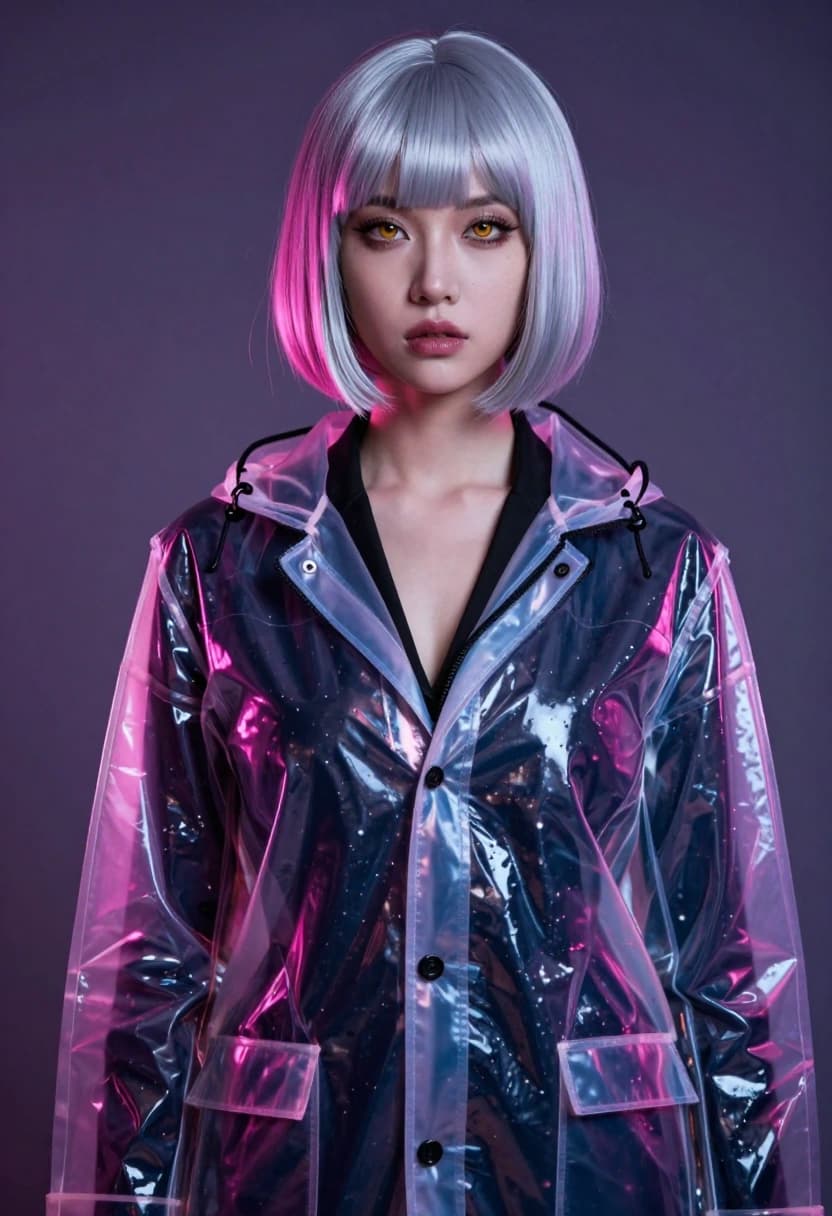
“Uncensored AI image generator” is a search phrase, not a complete product policy. People often use it when they want a tool that does not reject harmless fantasy, adult original characters, unusual aesthetics, body types, fashion, or dramatic scenes simply because a prompt is unconventional.
At Elyvie, uncensored means fewer creative restrictions for legal, original adult content. It does not mean no safety rules, no consent rules, or no respect for other people’s rights.
What the generator is designed to allow
The public preview is built for:
- fictional adult characters and character portraits;
- anime, illustration, fantasy, science fiction, and surreal art;
- photorealistic adults who are original fictional people;
- landscapes, environments, products, editorial images, and visual concepts;
- prompts with direct aesthetic language, without exposing a settings maze.
The goal is to avoid overblocking ordinary creative work. A fashion portrait with a translucent raincoat, a dark fantasy world, or an unconventional fictional character should not be treated as suspicious by default.
What is still prohibited
Fewer restrictions do not remove hard boundaries. Elyvie prohibits:
- sexual or abusive content involving minors;
- exploitation or trafficking;
- non-consensual intimate imagery;
- unauthorized harmful depictions of real people;
- illegal content or attempts to use the service to facilitate harm.
This is not a loophole hidden behind marketing language. “Uncensored” describes creative latitude inside those boundaries.
Original adults and real-person consent are different cases
A fictional adult created from text is not the same as a real identifiable person. Reference-image and LoRA workflows can preserve more identity information, so they require stronger handling.
The no-signup public preview is text-to-image. Elyvie’s separate reference-image and character-training workflows are for authorized adult subjects and use age and rights attestations. A tool can be permissive about style while still being strict about consent.
Are visitor generations public?
No. The public generator returns an image through a private, short-lived job capability. Visitor outputs are not automatically posted to a community gallery.
During the preview, a result may be retained privately for up to seven days so the team can compare prompts, failures, and model quality. The result frame includes Delete now. The six images on the generator page are different: they are first-party, hand-selected examples intentionally published for documentation and search.
Which model is being described?
The public preview and the six documented examples use Tongyi-MAI Z-Image-Turbo at nine inference steps. Elyvie also supports the base Tongyi-MAI Z-Image model for character workflows where LoRA support matters.
That distinction is important. A claim about “the model” should name the actual model and mode instead of implying that every pipeline behaves identically.
A practical way to evaluate an “uncensored” generator
Ask five questions:
- Does it clearly explain what remains prohibited?
- Does it distinguish fictional adults from real-person references?
- Are outputs public by default?
- How long are results retained, and can the user delete them?
- Does the site identify the model or publish real examples?
If a service promises “no rules” but cannot answer those questions, the promise is not useful evidence.
Elyvie’s current answer
| Question | Public preview answer |
|---|---|
| Signup required | No |
| Free allowance | Two images daily |
| Visitor outputs public | No |
| Preview retention | Up to seven days, with Delete now |
| Public model | Z-Image Turbo, 9 steps |
| Reference upload in public preview | No |
| Permanent public examples | Six curated first-party images |
These facts were last verified on July 29, 2026. Product behavior can change, so the generator page carries the current dated explanation.